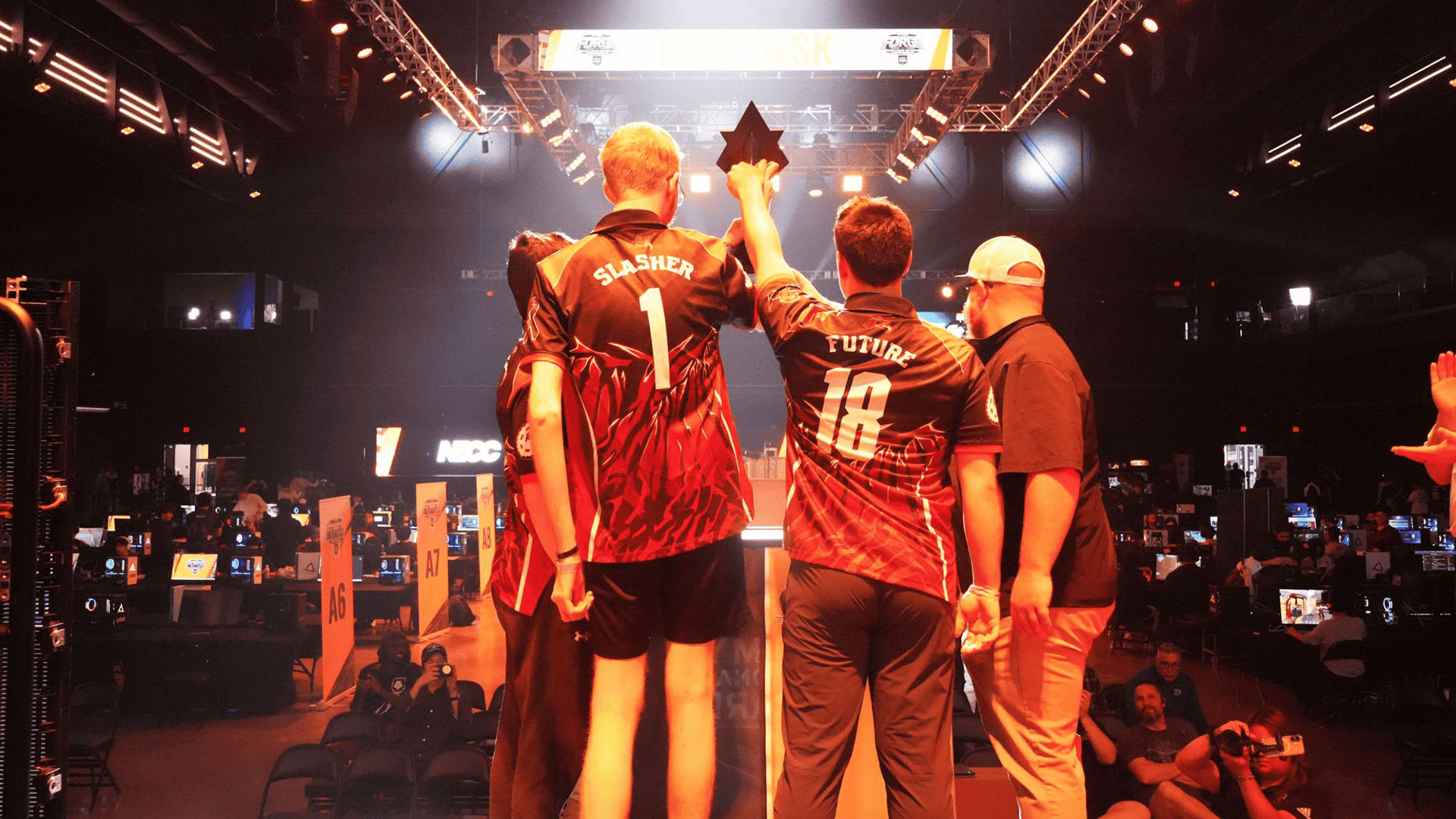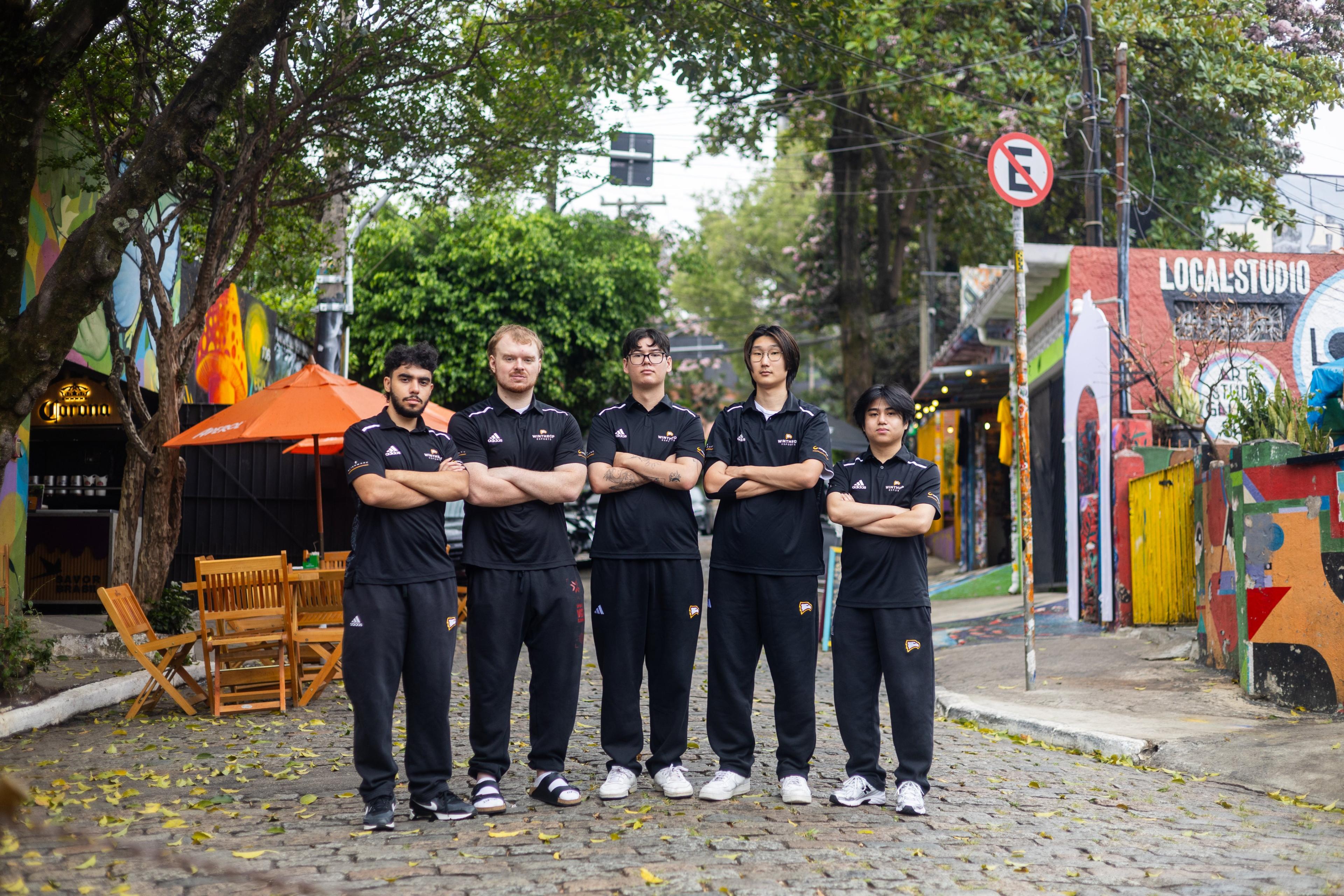

When Winthrop University’s VALORANT team stepped into the Riot Games Arena in São Paulo, Brazil, they weren’t just representing themselves and their university, they were representing all of collegiate esports. All that in another country, during one of the most important events of NA VALORANT Championship Series.
After battling through three stages of VALORANT Championship Series NA Circuit, Winthrop found themselves in 3rd place qualifying for the play-ins for VCT Ascension. They took down the Latin team of Six Karma and the Brazilian team of Red Canids in order to secure their spot in Ascension the following week. Their qualification marked a historic moment as the first collegiate team with a chance of qualifying for a Tier 1 VALORANT competition, and gave them an opportunity to compete with some of the best VALORANT esports organizations.
From Campus to the Global Stage
For Gabriel “moobs” Powell, Winthrop’s breakthrough wasn’t luck, it was months of team preparation, and years of individual prep.
“We actually took it seriously,” Powell said. “[We] scrimmed, prepared new comps, etc,” and they treated it like a true pro event. He continued, “we mostly show up for 99% of the collegiate matches and roll teams over. We only take Maryville seriously.”
Winthrop’s all-in mentality paid off. Their Ascension group stage included another win over Six Karma, a loss to Team Solid, and a decisive victory against 9z Team (including a 13-0 first map) to secure bracket advancement. In the playoffs, Winthrop fell to TSM and again to Team Solid, ultimately finishing 4th overall; an unprecedented result for a university program in this high of a professional competition.
Winthrop’s Results:
Play-ins:
- 🏆 Def. Six Karma (2-0)
- 🏆 Def. Red Canids (2-1)
Group Stage:
- 🏆 Def. Six Karma (2-0)
- ❌ Lost to Team Solid (0-2)
- 🏆 Def. 9z Team (2-0)
Bracket Stage:
- ❌ Lost to TSM (0-2)
- ❌ Lost to Team Solid (1-2)
Final Placement: 4th Place

Experience Meets Ambition
While most collegiate programs might find the transition to Tier 2 intimidating, Winthrop’s roster came prepared.
“We all have experience playing in tier 2,” Powell explained. “Ascension was just a LAN version of that, plus we have people like Governor who have experienced tier 1 so he prepared us as well. As for the tier 1 pros, we didn’t treat them like superiors.”
That confidence carried through every stage of their run, especially during high-stakes matches against Brazilian and Latin American teams. Powell highlighted the energy of facing Brazilian squads in front of home fans as a standout moment.
“I was excited to play any of the Brazilian teams for the crowd and I was excited to play against GMD (of TSM) since he’s my friend,” he said.
Changing the Collegiate Esports Landscape
Despite the remarkable finish, Powell’s competitive fire remains clear.
“4th place isn’t first so it obviously sucks,” he admitted. “But we changed collegiate esports with us making the tournament, let alone getting 4th so I’m proud to be part of the team that re-shaped the landscape.”
He also noted that Winthrop’s success comes from the program’s willingness to invest deeply in player development.
“I think we are still very far away,” he said about collegiate teams being competitive with Tier 1 teams. “Winthrop is first in the space alongside schools like Maryville to produce an entire team in pro leagues. Many schools are still underinvesting into players and not developing them with coaches. If teams want to replicate us they need to realise that Winthrop is investing a lot into us and our ambitions go beyond collegiate.”

The Reality Behind the Grind
While fans saw the glory of a top-four finish, the journey demanded immense sacrifice.
“Either [dedicate] 100% into it or don’t because players like glyph who dedicated every moment of every day to improve will outperform you,” Powell said. “Personally speaking, this entire summer consisted of waking up, gyming for 3 hours and then practicing and playing VALORANT ranked all day, 7 days a week, in order to prepare. I didn’t get to see my friends and barely saw my family. Those sacrifices separate the good teams from the greats.”
That level of discipline mirrors professional organizations, which is something Winthrop has steadily cultivated under Head Coach Declan “KingFred” Olien; Director of Esports, Josh “Bo” Sides; and Varsity Operations Manager, Dallas “Branchies” Branch.
A Blueprint for the Future
Winthrop’s Ascension roster: Philip “infiltrator” Nguyen, Gabriel “moobs” Powell, Ali “Ali” Salahedin, Peter “Governor” No, and Conner “GLYPH” Garcia, has become the blueprint for how collegiate esports can operate as a legitimate talent pipeline.
“I think collegiate is the way as it gives players something to do after Valorant is done,” Powell added. “[I] think teams can try to balance it but we sacrificed a lot of time in order to even qualify for Ascension and are now very behind on some school work but thankfully Winthrop is being patient with us.”
For Conner “GLYPH” Garcia, who is rumored to be heading to a Tier 1 organization next season, Ascension was both a milestone and a turning point.
“Ascension was the biggest event I’ve played in my career so far,” Garcia said. “It was an invaluable experience and memory in my life. Playing in Ascension as a collegiate team is monumental not only for our school but also for the collegiate scene. More people will now legitimately view collegiate as a viable path for their careers.”
Garcia hopes Winthrop’s success can help dismantle the lingering stigma around collegiate competition.
“From a lot of tier 2-1 perspectives there was this stigma that judged that as non-competitive teams in competitions outside of the collegiate bubble,” he explained. “Already I am seeing a lot of new interest from talented and experienced tier 2 players and I’m excited to see how the landscape will change and how competitive it may become raising the overall floor.”
He also sees a critical moment approaching for university programs.
“I feel like this year I have seen a lot of universities pull out of esports or reduced their funding in the department within their schools,” Garcia said. “But in my experience going through 3 collegiate schools there is so much interest and excitement around the space and the main question for common people is how can they get involved.”
Their story reflects the evolution of collegiate esports: from campus clubs to internationally competitive programs capable of holding their own against professional rosters.