
As colleges and collegiate esports programs close across the nation, and many expect changes to affect the landscape, students and staff are asking what comes next for the college esports landscape.
The Spring and Summer 2025 seasons have looked rocky for the college esports landscape, with some colleges and esports programs across the United States shutting doors on teams and their organizations.
The shocks started during August 2024, with SLU (St. Louis University) Esports closing their doors after winning the Collegiate League of Legends (CLOL) championship in May. With hype still swirling around the team’s major win, the students were suddenly informed by the school administration that their program would be cut. The move was stunning, and former director Nick Chiu noted in a previous article with College Esports News (CEN) that there was never an indication of pulling back the program. Despite the program’s closure, students’ scholarships would be honored.
Next came the announcement of ISU’s famous Redbirds dissolving their esports program, allegedly due to budget cuts around campus, even after making an impressive 5 championship run in Overwatch. Students signed to their highly successful teams were allowed to keep their scholarships, a fulfillment of a recruitment promise, but many looked for new homes to continue competing. The varsity esports program officially closed their doors on May 19, 2025.
While some programs are closing entirely, there are some that are just sunsetting specific game teams.
Following the news of ISU was Maryville University’s star-studded Overwatch program. Another top collegiate Overwatch contender, it was a surprise to see the team go. The rest of the Maryville program remained, planning for the future with new games and stable leagues.
Daniel Clerke, the director of esports at Maryville, noted in the school’s statement that the collegiate Overwatch scene was unreliable, with Overwatch Collegiate (or as many older players knew it, Activision Blizzard Collegiate) being quietly cancelled this past Spring semester. The Overwatch team would make room for new and upcoming games such as Rematch, which was recently released to great success, or Deadlock, which remains in alpha testing, but is gaining traction.
The running thread of these many program closures, with the exception of SLU, appeared to be budget cuts and Overwatch. Many people had argued that Overwatch had run its course, especially with the explosively successful release of Marvel Rivals. This also comes around the same time that the Overwatch League officially ended, and rebranded as Overwatch Champions Series (OWCS), seeing relatively decent success in their inaugural and second year of tournaments. So why is collegiate Overwatch struggling? Perhaps more students are simply creating their own teams to compete in the highest division of Overwatch, rather than play collegiate.
On the Overwatch train came the sudden announcement of UCI’s Overwatch team waving goodbye to the scene. A top competing team at one of the longest standing programs in the space, it was another shock to see the team dissolve. Again, budget cuts were cited in the team’s official statement, as well as waning collegiate interest in the game, and a largely graduating roster. Graduation was also cited in Maryville’s roster disbandment, implying that the competitive collegiate Overwatch sphere is aging out. With no new talent to fill their shoes, it is almost natural that programs struggle justifying high-cost teams with stellar players and full-ride scholarships.
Ronald Ly, Assistant Director of UCI’s esports program, told his X audience that although UCI had great success in wins and losses, what truly mattered was that everyone became the best version of themselves.
“Now, going into the program’s 10th year, we are evolving again,” Ly wrote, “Please support them in that transition.”
Ly also commented in his statement that the collegiate industry is in fact facing great changes, and this can be an anxious and troubling time for students.
“Speaking as someone unemployed after today, I’m still telling you to rest your worries! People need connection and always will. We’ve shown we can build that in abundance here.”
However, while Ly is remaining positive, for some, it’s harder to fight what feels like losing battle.
What differs in UCI’s disbandment is that the students were not as blindsided as other cases. Otters, a player on UCI’s Overwatch team, posted that the whole team knew that this closure was coming. They still committed to an amazing season.
Another such case of fund reallocation was Simpson Esports. The school administration has clarified that they are not dissolving their varsity esports structure, said previous director Hubert Whan Tong, but are looking to hire a lesser-paid stipend employee to assume director activities.
“I think programs at the college level are often fundamentally misunderstood or misrepresented by their supervisors,” said Tong, “It’s very easy for admin to frame it as gaming and a solitary activity.”
Tong also recommended that if schools are looking to optimize, much like Simpson College and other programs looking to divert funding, that having an esports representative at the table is important.
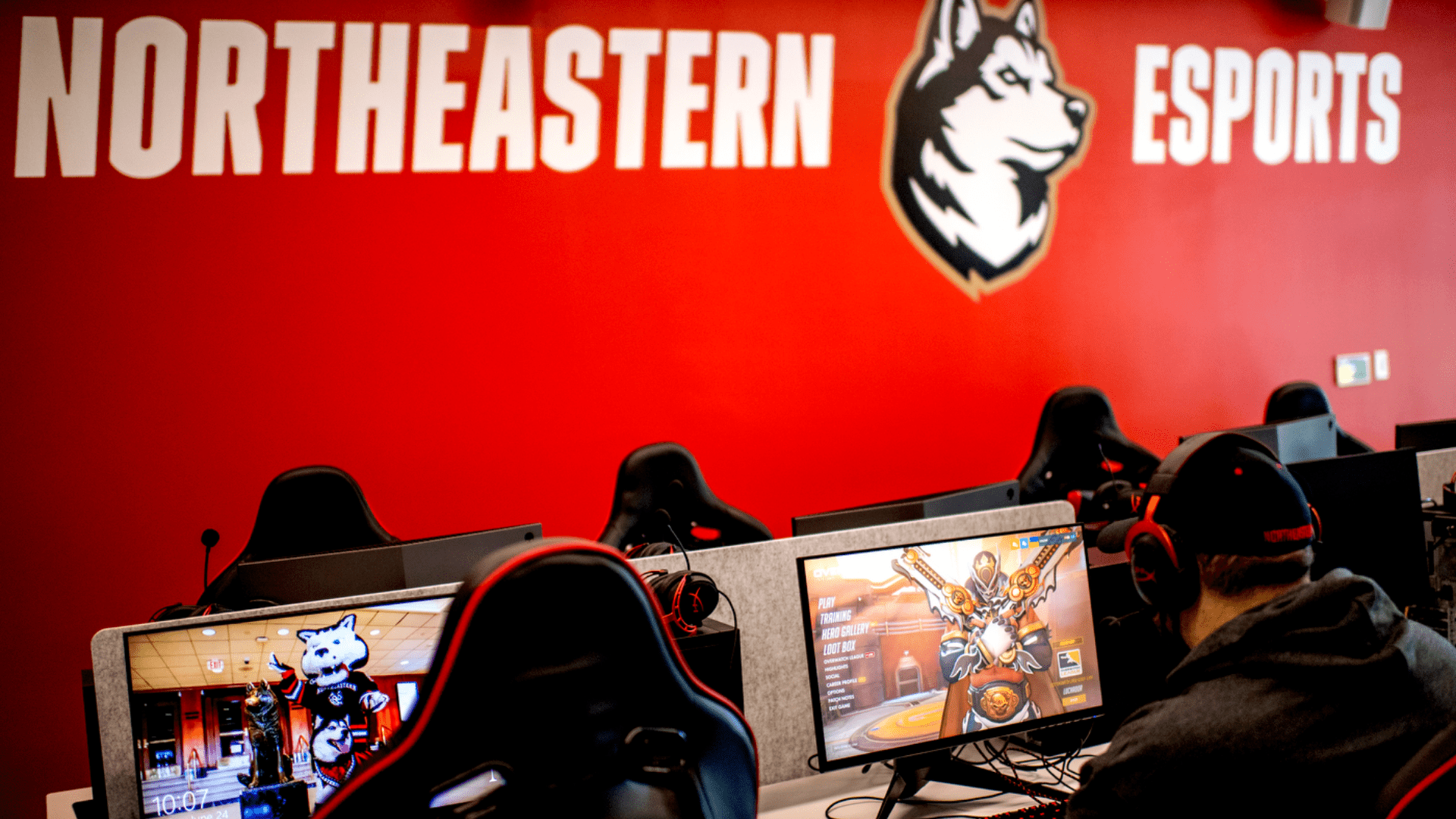
Another program to face a restructuring was Northeastern University.
“Like many universities and athletic departments across the country, we continue to navigate through an uncertain financial climate,” remarked Jim Madigan, Director of Athletics and Recreation at Northeastern in a statement to Northeastern University’s athletics community.
Overall, it seems that programs are suffering from a reported low student enrollment rates, a turbulent economy including changes to the Department of Education and administrative goals, rising prices, a disconnect between the esports staff and school admin, and a need for budget cuts. Teams are fighting for a spot at the table that seems to be set a plate too short. So, what do we do?
What comes next?
In light of all these closures and changes to the competitive collegiate ecosystem, what comes next for the world of collegiate esports?
John Price, Esports Manager at Ohio State, has seen this stage before. Before joining Ohio State, his previous program faced a disastrous cocktail of mismanagement, budget cuts and rising costs, and a dip in student enrollment.
“When something like that disappears, a haunting and empty feeling remains that is insidiously pervasive. It often causes you to second-guess every action you took. Even if the reasons for the closure happened far before your tenure and wholly outside of your control, there is always that “what if…” lingering in the back of your mind,” said Price “More often than not, there’s no clear way forward, and good people end up leaving esports as a whole.”
But despite what looks like a bleak situation, Price and other directors are remaining hopeful for the world of college esports.
“Overall, I’m optimistic for the future of the activity; there are many exciting developments taking place at all levels of scholastic esports, which are poised to prove just how sustainable the activity is,” Price added.
Travis Yang, Director of Esports Competition at Syracuse agreed with the optimistic sentiment.
“Going into my 8th year working collegiate esports, I remain optimistic for how our ecosystem is trending (despite constantly losing sleep thinking about if we’re on the right track haha). Year over year, professional and student leaders become better informed and as a result, their programs become more efficient, leaner, and better defined to accomplish what their institutional goals are.”
Yang also added that this isn’t the end of program closures. Changes are inevitable, but programs are perfectly poised to thrive in this ecosystem. He clarified that programs of any size are susceptible to cuts when larger goals aren’t met, but there is a place for admin and esports staff to connect over strategic planning for the future of the program.
“Ultimately, every program’s leadership, if not already, should be having consistent and realistic conversations with their administrations. Getting ahead of issues to steer conversations and setting the right goalposts are critical for programs to survive downturns.”
Sari Kitelyn of Full Sail University, added onto this method of working with administration to ensure team success.
“What we need moving forward is better alignment and understanding between institutions and the people running these programs. That means clearer definitions of success, more consistent support, and a shift from treating esports as an experiment to treating it as a real, integrated part of campus life.”
Kitelyn also advised programs to focus on more than just competition to survive ecosystem shifts.
“The solution is about aligning with institutional goals, showing your program’s impact to the institutional bottom line, and being flexible as needs shift. Programs that treat esports like a long-term investment in student engagement, career development, and enrollment support are the ones best positioned to survive the ups and downs.”
Siena Heights situation
One school that experienced these financial struggles was Siena Heights University (SHU).
The esports program at SHU was breaking into the top teams nationwide, dominating in games from Rocket League to Overwatch.
However, the team’s success could not withstand the closure of the entire university, leaving students without a college or esports home.
It is important to note here, that while we say goodbye to the SHU esports team following the 2025-2026 school year, the esports program was not the main reason for the school’s closure. Siena Heights faces a different battle entirely. It is tragic to suddenly say goodbye to an amazing program, but it must be emphasized that esports was not the reason for the program’s departure from the scene.
In the absence of this powerhouse program, and many other esports teams looking to help their amazing students find new collegiate homes, many schools are linking students with recruitment opportunities and applications to help them find a place to succeed both academically and on the screen.
High School vs College vs Professional
When examining the college esports landscape, which currently is struggling through aforementioned enrollment downturns, increased costs, and looming budget cuts, the stability of the entire ecosystem can be called into question.
David Dickert, former Director of Esports for the University of Southern Mississippi, said that while collegiate esports may be struggling, high school esports is thriving.
“Colleges are businesses—if esports doesn’t demonstrate clear ROI tied to enrollment, retention, or academic value, it becomes expendable,” said Dickert, “High school esports is more stable because it’s not being held to the same ROI standard. It benefits from integration into STEM, CTE, and extracurricular funding buckets that already exist.”
Dickert also echoed Kitelyn’s statement about integrating esports into the broader college landscape to ensure a strong foundation within the school’s priorities.
“Programs need to be admin mission-aligned from day one—supporting recruitment, retention, student success, and curricular innovation. Without a clear institutional value proposition, proper admin backing… Admin education on what esports is, and how to progress esports on their campuses, esports stays siloed and is ultimately seen as non-essential when budgets get tight.”
Conclusion
Overall, it seems that collegiate esports is stuck between a rock and a hard place. How do we achieve success and results that appeal to administration and also to our players? How do we reconcile low enrollment and rising costs?
With the Fall semester rapidly approaching, programs are sitting down with their leaders to discuss the path forward for their players and coaches, to avoid closure like many other teams. It seems this is the best way to slide a chair into the table and assume a more vocal position amongst stakeholders.
While we don’t know which direction this current path will go, what is most important is the strength of the collegiate community through it all. Programs will come and go, but the community that esports creates transcends budget cuts and ecosystem shifts.