Once again, Collegiate Rocket League LANs bring another level of excitement not quite felt online. From East Tennessee State University’s $4,000 Tri-Cities Slam LAN, to Syracuse University’s Boost on the Beach that takes place inside an active restaurant, and all of the smaller events in-between have shown that for yet another semester.
With many more in-person competitions to come as April and May’s busy calendar draws closer, there have been around nine LAN competitions throughout the CRL scene so far. Using the arbitrary “Major CRL LAN” parameters noted in College Esports News’ CRL LAN Retrospective of last semester (multi-thousand dollar prize pool and a large field of notably ranked rosters), the only Major CRL LAN so far this semester is the Tri-Cities Slam, hosted by ETSU.
Tri-Cities Slam
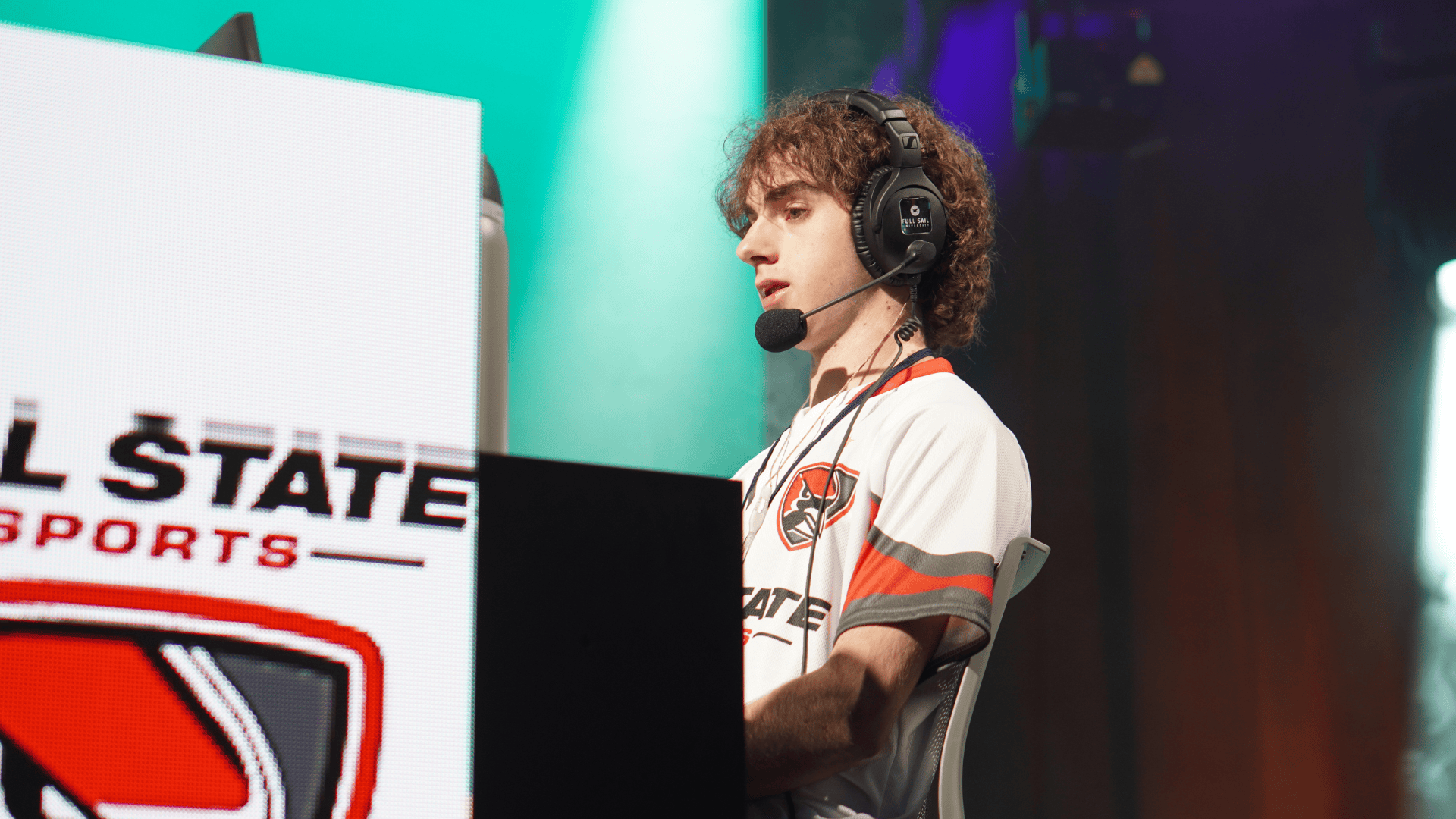
From March 6 through March 8, 20 CRL rosters gathered in Johnson City, Tennessee on the campus of East Tennessee State University to compete for the largest Collegiate Rocket League LAN prize pool of the 2025-26 school year. The $4,000 on the line surpassed the Scenic City Invitational ($3,000), DreamHack Atlanta Collegiate Invitational ($1,500), and the Bluegrass Boost Battle ($3,500) Major LANs of last fall.
Most notably, the rosters of Concord University, the University of Akron, and the Indiana Institute of Technology had recently qualified for the publisher-backed CRL competition’s top 16. This set up a clash with other tournament favorites like Oklahoma Christian, Brewton-Parker, and tournament hosts East Tennessee State.
Days 1 and 2 of the Tri-Cities Slam included Group Play, with the field of 20 divided into four groups of five. While Groups A, B, and D played out in a fairly standard manner, save for ETSU grabbing the top position in Group D over favorites, Akron, Group C stole the show.

Entering the TCS, Oklahoma Christian had been seeded number 3 overall, positioning them as the favorites to win a Group C filled with players with an exceptional amount of CRL LAN experience.
Runners-up of the DreamHack Atlanta Collegiate Invitational 2025, the University of Florida, began their Group Stage slowly with losses to UT Dallas and Brewton-Parker. However, the Gators would turn their tournament around with an enormous upset over Oklahoma Christian, 3-1, before closing with a sweep over Indiana Tech’s B-team.
This would narrowly qualify them into playoffs as #3 out of Group C thanks to the game differential tiebreaker over a UT Dallas team that was a game 5 victory away from beating Oklahoma Christian and taking OC’s spot in the playoffs for themselves.
Thanks to that game 5 win and a 3-0 sweep over Brewton-Parker, Oklahoma Christian would finish second to BPCU in their group to make the playoffs despite the chaotic start.
Elsewhere, playoff berths for squads like Winthrop Academy, Daytona State, and Conestoga demonstrated a successful translation of online tournament success to the LAN stage for several new faces to the top of the CRL scene. Even as the playoffs began, their momentum continued.
Daytona State nearly delivered Oklahoma Christian a Round 1 exit by way of another scary, full best-of-5 for the OC Eagles. Nearly. For Winthrop Academy, their momentum continued through a Round 1 win over Conestoga, Round 2 win over DreamHack Atlanta playoff team WCTC, and into a top 6 finish after being knocked out by Indiana Tech.
After a tumultuous first few days at TCS that nearly saw a Round 1 exit from the playoffs, Oklahoma Christian finally found a flow after their win over Daytona State. They would not lose another game until the Grand Finals, tearing through CRL Top 16 team Akron, tournament hosts ETSU, and finally through a Brewton-Parker team that is familiar with a LAN stage.

On the upper half of the bracket, following their win over surging Winthrop Academy, Indiana Tech would face their toughest test yet: a Concord University roster that has won the most CRL Major LANs of any team in the scene in the last two years, including two of the three last semester.
This clash resulted in one of the biggest crowds a solely collegiate Rocket League LAN has seen, gathering to watch as Indiana Tech and Concord battled through seven full games of their best-of-7 semi-final, before a 5+ minute overtime in game 7 ended in Indiana Tech’s favor.

The contrast of Indiana Tech’s grueling semi-final victory and Oklahoma Christian’s 12-0 run of games played between the end of their Round 1 series and the Grand Finals seemed to take effect for the final match of the Tri-Cities Slam. Oklahoma Christian, a team that nearly saw elimination on Day 1 of the tournament, appeared to deplete the energy of Indiana Tech as they claimed the Tri-Cities Slam LAN and its $1,500 first place prize as theirs with a 4-2 victory.
Boost on the Beach
While Boost on the Beach may not meet the standards of a Major Collegiate Rocket League LAN, its position in year four of operation justifies a bit of coverage. Even with no prize pool, the environment and excitement of BotB is enough to draw teams generally ranked in the CRL Top 48 like Syracuse, ETSU, Florida Southern, James Madison, South Carolina, Tennessee, and more.
Hosted solely by Syracuse University this year, Boost on the Beach once again took place within one of the most iconic collegiate esports venues, Myrtle Beach’s “The Hangout.”

The Hangout is safely the only venue for a LAN of this scale that encourages its inhabitants to climb atop its tables and dance to music blaring over its loudspeakers every single hour, even while Boost on the Beach is actively being played out. This is because The Hangout is not just a LAN venue, but an active restaurant where families are exposed to collegiate esports while eating a meal at Myrtle Beach.
Any tournament that sees semi-finalists like East Tennessee State and James Madison dancing on tables together just before their series to send one of them to the Grand Finals cannot easily fly under the radar.
On the competition side of Boost on the Beach, this LAN was highlighted by underdog runs from James Madison and Florida Southern College into the semi-finals before meeting the two tournament favorites, East Tennessee State and Syracuse, head-on. The tournament favorites would win out without long series and tee-up a Grand Final between two squads that had seen their share of struggles with finding consistency on LAN in the lead up to Boost on the Beach.
Despite close games and multiple overtimes, Syracuse University found themselves hoisting the Boost on the Beach trophy after a 4-0 sweep of ETSU.
Queen City Clash
The Queen City Clash is another instance of a Collegiate Rocket League LAN not quite meeting “Major CRL LAN” status, but is still worth noting as a staple of the LAN calendar. Hosted by the University of Cincinnati, the QCC has been run by the club esports program of UC for more than 3 years.
With a prize pool of just $1,000, QCC was headlined by the notable rosters of Brewton-Parker, South Carolina, Tennessee, Shawnee State, and the B-teams of Kennesaw State and Brewton-Parker.
After two days of play, Brewton-Parker planted their flag upon Ohioan soil after staving off a South Carolina bracket reset in the Grand Finals and a Tennessee roster whose core of players had won the previous two Queen City Clashes.

Carolina Collegiate Clash
Acting currently as a glimpse into what regionalized collegiate esports competitions can become, the C3 Esports League and its end of semester LAN are quickly gathering attention.
The league that has been built largely by student passion assembled a $1,000 prize pool for the culmination of an online season that concludes on LAN in Wilmington, NC. Notable names at the C3 LAN include South Carolina, UNC-Charlotte, Winthrop Academy, NC State University, and Clemson University.
The Grand Final featured the streaking UNC-Charlotte and Winthrop Academy, neither of which dropped more than one game in series not played against one another. While Winthrop Academy took the first series the two played at an earlier stage in the tournament, UNCC managed to claim the C3’s title of “Best in the Carolinas” after a thrilling game 7 victory.

LANs to Come
As privileged as the Collegiate Rocket League scene would be with just nine LANs in a semester, there are still many more to come. Including those of the major third-party organizer leagues like the NECC and ECAC’s LANs in partnership with Rally Cry in San Antonio, TX, the NACE LAN in Orlando, FL, and CECC in Waco, TX.
Although the larger collegiate leagues will host in larger venues to greater audiences, school-hosted and regionally organized LAN events like the University of Tennessee’s VOLAN and Gaming Oasis’ Northeastern and Southeastern Esports League LANs should not be forgotten.
Any way the greater collegiate community can support in-person LAN events of any scale, the better off the collegiate ecosystem will be.