
At the start of the COVID-19 pandemic in March 2020, Rally Cry launched with the mission to “bring organized gaming programs to players of all ages and skill levels across the nation.”
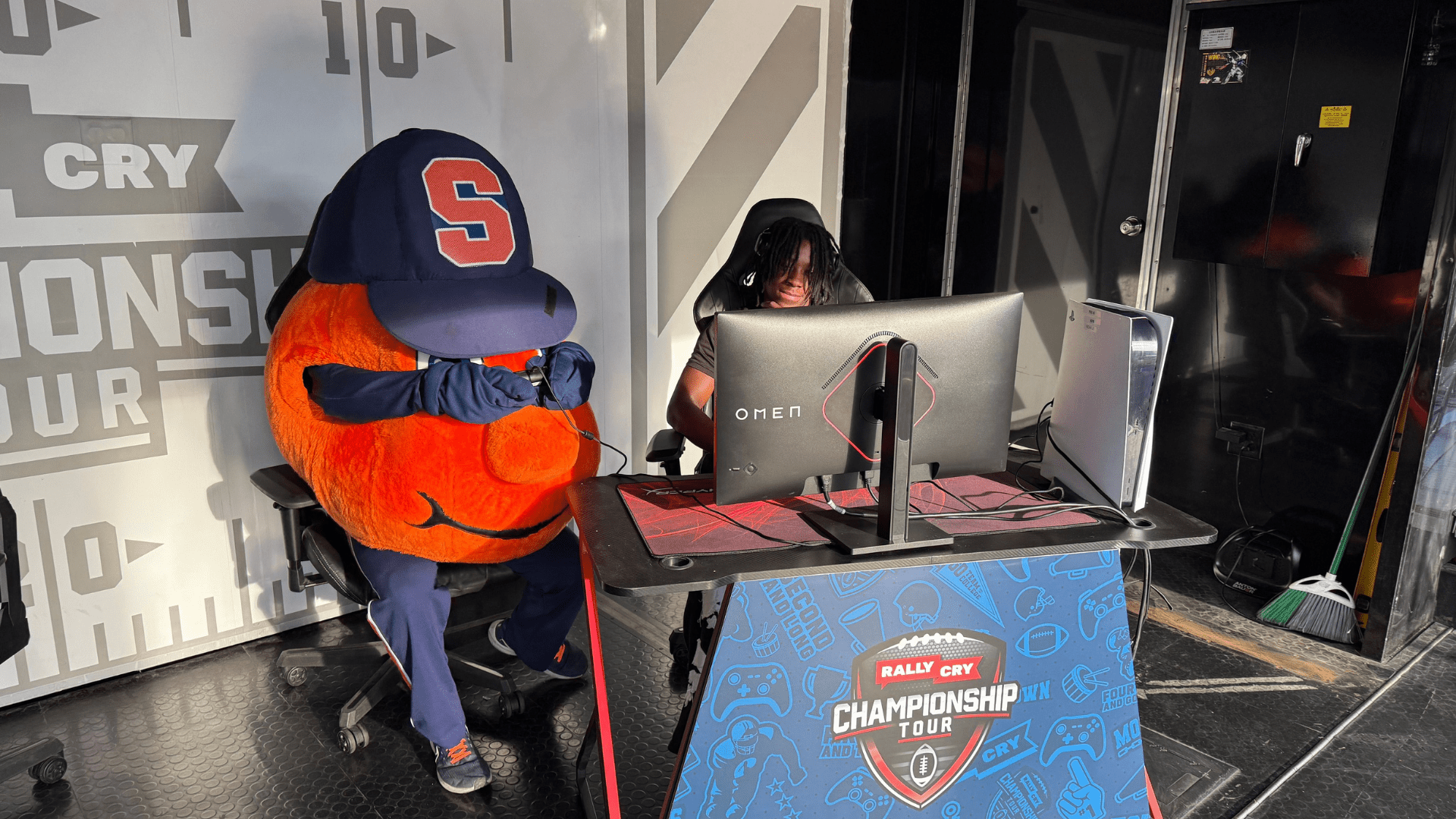
Founded by former Tespa President and Cofounder, Adam Rosen, Rally Cry announced its launch with $1.2M in seed funding from investors such as Marc Merrill (co-founder of Riot Games) and Kevin Lin (co-founder of Twitch). Five years later, the company has just wrapped up its second iteration of the Rally Cry Championship Tour, where they travel to big collegiate football rivalry games across the country and host an EA College Football event to play out the rivalries in game.
We spoke with Rosen about the Championship Tour, collegiate esports, and the future of the company.
Hitting the Road: The Rally Cry Championship Tour
Rally Cry’s partnership with EA College Football is one of several between the publishers of major sports titles and esports organizations. The most notable of these was arguably the 2K League, which was an official competitive league for the 2K franchise before being revamped in 2025. While the 2K League targeted the hardcore fans of 2K looking to see the highest level of play, Rally Cry sees itself going after more casual fans, even those not a fan of the games at all.
Rather than create a full esports league, it’s only semi-competitive with the focus being on creating a good atmosphere that people who only showed up for the rivalry game are attracted to.
“We set up right outside the stadium, and we do a live broadcast, and folks will come through, and they maybe won’t know exactly what’s happening at the start, but they’ll see that we’ll have a Florida player on stage and a Georgia player on one side,” Rosen shared.
“And that resonates right? The Georgia Dogs who come through don’t really care. They just want to beat Florida. And it’s an interesting way to be able to capture them. And suddenly, after they give it a minute or two, might watch the content, see our casters and how passionate they are about it, and then start to understand that the rivalries that we’re playing out on stage are just as exciting and real and passion driven as the rivalry of the game that’s about to take place.”

What Rally Cry Brings to the Table
Whenever a new company enters the scene, they develop a reputation for something they specialize in, ideally better than anyone else in the space. For Rosen, he prides Rally Cry and the Championship Tour on their production value, a factor he sees as essential to bringing in new fans:
“I think there’s a couple of things that we do exceptionally well that I think the greater Collegiate Esports ecosystem benefits from. I think one of those things is that we can create these really high stakes, flashy programs like the college football tour that bring a ton of attention to the student athletes who are competing representing their schools, and give us this really authentic surface area to tell stories about them and the programs and get people interested and excited about that.”

On top of running events, Rosen has made building out the tech infrastructure of Rally Cry a priority. This means building out their own event management platform similar to competitors like start.gg and Challonge, but also more custom solutions centered around ease of use.
“I think the automation piece has been something that we’ve been focusing on a lot as well. So how do we tap into game APIs?” Rosen explained. “So, for example, we just operated a major live event for Riot Games for TFT. So we built out TFT automated tournaments that anybody around the world could register for, and then we have an automated match lobby system that’s super scalable.”
He went on to say, “When we focus on automation as a platform, we make it a lot easier for our league organizers to do their jobs and to focus on the pieces that are really fun, which is working with the students and clubs and the coaches versus having to dive into spreadsheets and spend a lot of time managing the actual matchup operations. And as we look towards the future, I think a lot of what we look at that differentiates us and our platform is ease of use, and also that scalability.”
Most of the big events that Rally Cry does are white-labeled, meaning their involvement is behind the scenes rather than having the Rally Cry brand front and center. They work with a wide variety of partners in this capacity, from popular game publishers like Riot Games to the United States Military through the Air Force. Rosen views the balance between Rally Cry running their own events as well as for others to be a healthy one, though he’s looking to push more events under the Rally Cry brand going forward.
“We have a very multifaceted business. There are a number of products that we have that are Rally Cry facing. And I think if you look this year compared to the year before and the year before that, you’re starting to see more and more Rally Cry forward-facing branded properties. And that’s intentional,” he shared. “When we look at the ecosystem, we think it’s important that we have a number of owned and operated products that are Rally Cry branded, that are public and people are engaging directly with and then we at the same time, being able to power these white label properties is also very important for us.”
He continued, “So from a business perspective, we monetize each of those angles differently. When we think about Rally Cry owned and operated, a lot of times it’s brands, it’s sponsorships, it’s media rights. When we’re looking at creating white label properties for others or our service-based business, it’s a service-based business, and we try to create a balance, and we try to have a good distribution of revenue streams within the organization.”
“Because we understand, especially, you know, a service-based business, budgets sometimes are cyclical,” Rosen shared. “Sometimes they come and go, sometimes [there are] larger economic reasons why, publishers are spending less, or games are going out of business, or new games are rising. We want to make sure that we are resilient.”

Rally Cry’s Push Into Collegiate & Sustainability in the Space
Over the past year, Rally Cry has been making a larger push into collegiate esports. Besides the Rally Cry Championship Tour, they recently announced a partnership with ECAC to stake a claim on one of the big collegiate esports leagues alongside NACE, NECC, and PlayVS. At the same time, programs have been shutting down due to budget cuts across all departments of universities.
Rosen shared his thoughts on the matter: “When I think about the collegiate ecosystem, I am a very firm believer in the power of the feedback loop between community [and] competition, and I think a lot of schools have cut recently has to do with, you know, these departments, official teams obviously they can be pretty expensive to operate. I think, of course, there’s a tremendous case for having those at every single university, but not every university maybe has the funds or agrees.”
In the wake of these cuts and the uncertainty of programs across the country, making collegiate esports sustainable is top of mind for Rosen:
“One of the things that we try to do at Rally Cry is to give tools to mobilize and engage that broader community that then can create an impact and show value to the schools to continue justifying the growth and continued expansion and funding of those programs.”
He went on to share, “We think about sustainability in two ways. The first way we think about sustainability is, how can Rally Cry be investing in infrastructure that others can tap into at zero cost to relieve the funding stress on those schools and allow them to do more. And then we also think about sustainability [as], how do we help the individual schools and the students and the coaches there make the best case to support their programs over time?”
For Rally Cry, part of that investment infrastructure is creating an environment where the cost of events is shared across multiple parties, particularly corporate sponsors. The hope being that schools can continue to put on great events while not being reliant on ever-changing club and program budgets.
“This past year, we hosted a scholastic esports championship for the first time, so essentially a shared forum where the top competitors across the country come together and can compete, working with partners like NECC, and partners like EGF [Electronic Gaming Federation], local groups like R20 Esports,” Rosen said. “And the idea behind those events is how can we create this shared environment where league organizers are no longer having to fund hundreds of thousands of dollars to host individual silo events all over the country, [but instead] come together, pay for that once and allow everybody to tap into it so that then the funding there can go to improving and investing in other parts of their organizations that [are] going to help them grow.”
Sustainability is always a tricky thing in the esports space, especially when companies arrive on a wave of investor funding. We’ve seen groups such as Wisdom Gaming completely close their doors, and Nerd Street Gaming having a much smaller footprint than they had closer to the launch of VALORANT.
Rally Cry is, currently, largely a service provider. The bulk of their revenue is coming from their partnerships with established brands as opposed to their own properties. In addition, much of their funding for events under their own name also comes from established brands, as opposed to registration fees.
As Rosen talked about, budgets are constantly changing. Leadership at these companies changes over time, and with new leadership comes new funding priorities. Many esports organizations die when their key financial partners back out, leaving them with far less revenue with all the old expenses.
Rally Cry has done a good job at diversifying the amount of sponsors they work with, engaging in a number of projects across esports. It’s impossible to know where the company will be in another five years, but for the sake of sustainability, hopefully it’s continuing to help power events across the space.