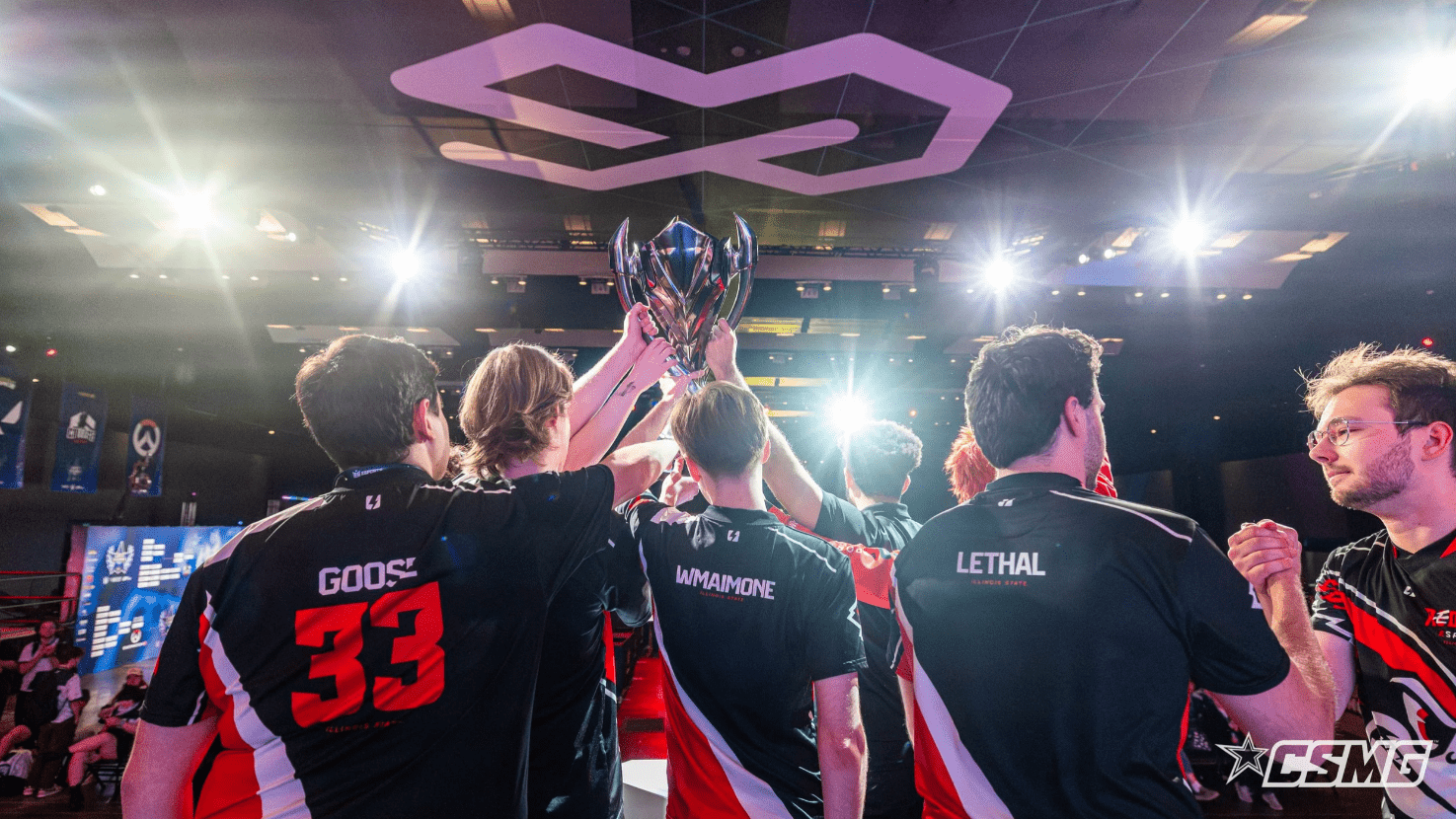

This past weekend, CFGC held their first 2XKO tournament: CFGC Underground #1. The event drew 14 competitors engaged in frenetic tag fighter gameplay with Yata ultimately taking the top prize. With the game both technically not officially released but also fully available for anyone to play, 2XKO has arrived after years of anticipation. Now that it’s here, what will that mean for collegiate esports, fighting games, and their intersection?
Historically, fighting games haven’t been at the top of the collegiate esports hierarchy. Various MOBA and FPS titles have come and gone over the years, but fighting games have been historically shunned outside of the Smash Bros. series. CFGC has made great strides over the past year to give FGC titles the platform they deserve on the collegiate stage. Still, the limelight has largely avoided fighting games.
However, the limelight has not avoided Riot Games in the slightest. Currently, two of the most popular, if not the most popular, collegiate esports are owned by Riot. League of Legends and VALORANT have captured the collective interest of players at the collegiate and professional levels. Not only that, but those titles are in entirely different genres, giving MOBA and FPS fans genre leaders with impeccable graphics, tight gameplay, and endless hours of replayability.
There’s a hope from many within the FGC that the immense appeal of Riot Games will usher gamers unfamiliar with the genre into the fold. While that hope is outside of a collegiate context, given the popularity of Riot Games titles across all the top collegiate leagues nationwide, there’s no reason for that hope to not spread to the future landscape of collegiate esports.
Without peering too deeply into a crystal ball, there’s good reason to believe a new wave of fighting game players might be on the horizon. 2XKO features prominent League of Legends characters that have garnered even more acclaim thanks to the hit series Arcane. In its current state, the game looks and plays as good as expected, featuring a lack of special inputs designed to make the game appeal even more to a casual audience. If all that wasn’t enough, the game is free, making it around $70 cheaper than the average new AAA fighting game title.
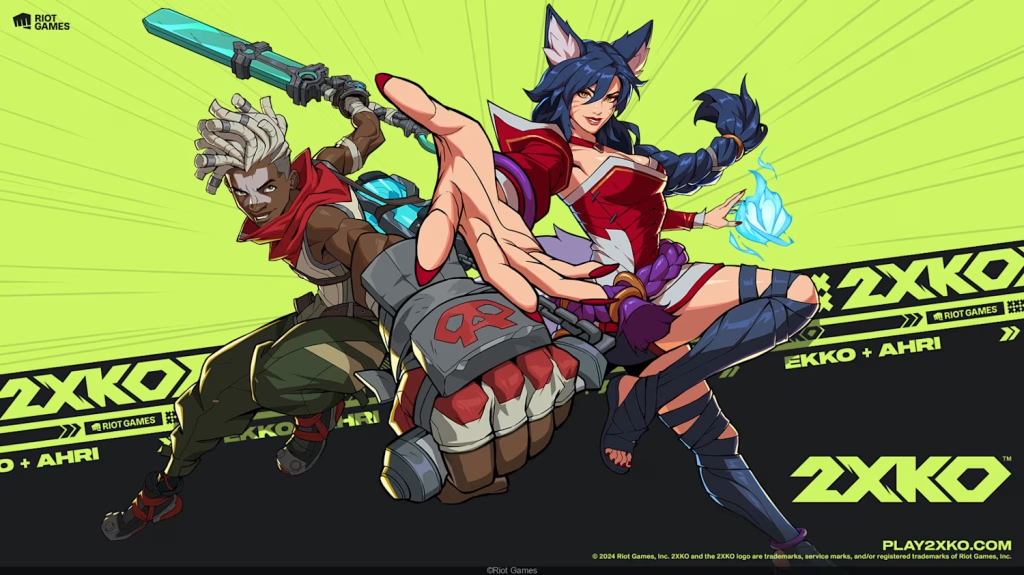
The flip side of the coin is just as convincing. Even with easier inputs, 2XKO features the chaotic tag gameplay that can leave new players feeling like they’re underwater. Even if 2XKO is a smash hit, who’s to say that floats the rest of the FGC to the surface? Despite League of Legend’s popularity, the only other popular MOBA is Dota 2, whose predecessor is the creator of the genre. Teamfight Tactics hasn’t led to an emergence of prominent Auto Battlers.
If 2XKO is a success, it will almost certainly lead to Riot running their own collegiate series in the same vein as CLOL and CVAL, which are seen by many as the most prestigious collegiate events in their respective games. After all, it’s hard to compete with the prestige and marketing budgets of the studios and publishers themselves. Does a Riot-lead campaign into the collegiate FGC lead to an even bigger push of fighting games into the prominence of collegiate esports, or simply just a fractured scene?
It’s unlikely there will be any real answers to questions about 2XKO’s impact on the collegiate FGC for a while, at least until EVO when the game gets its chance to shine. Until then, everyone can enjoy the simple things: like stunlocking Darius with a barrage of tentacles.