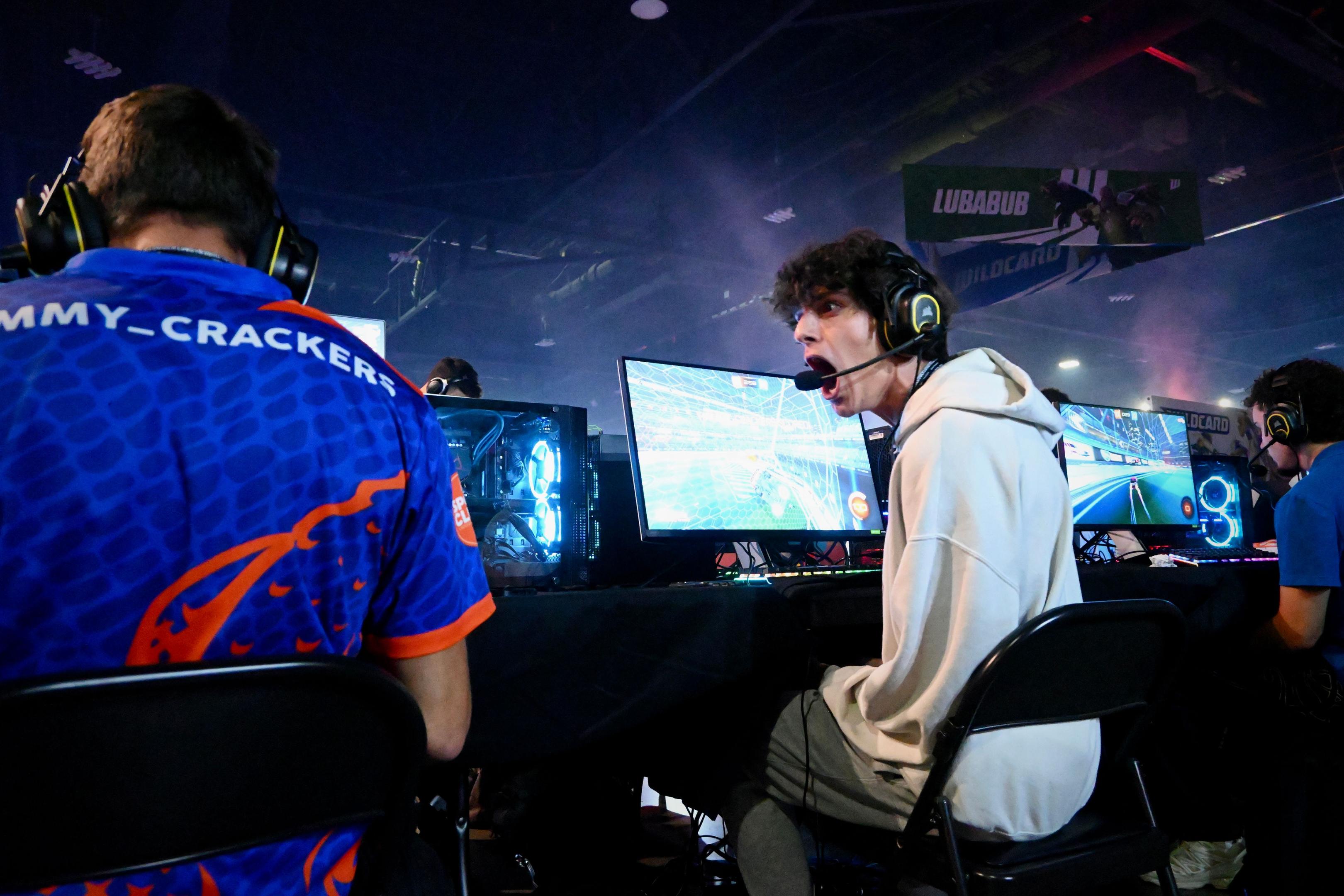
Two colleges hosted their yearly collegiate LANs just before the holiday season. St. Clair College (Ontario) and Rutgers University (New Brunswick, U.S.) once again held massive in-person events open to their student bodies and the public.
Collegiate LANs have been going on since the early days of gaming, but their scale is only growing larger. From full video production to sponsors and tournament prize pools, these events transcend the college campus and become part of their area’s general gaming community.
With many of the major collegiate leagues pushing for more in-person events, colleges have taken it upon themselves to host incredible events of their own accord.

Fireside Open and Winter Wonder-LAN
St. Clair College put on a grand event fitting of their status as a top esports program. The lead-up to the event saw festive social media posts advertising the games being offered, along with the talent helping to bring the event to life.
For just $5, anyone could spend a day at St. Clair’s incredible Esports Nexus. With over 100 gaming PCs, console gaming, and racing sims, the space is a gamer’s paradise.
On top of the incredible esports center, St. Clair also hosted a variety of tournaments ranging from Smash Bros. Ultimate to VALORANT, and even Fall Guys. The event had their own handwritten ruleset to detail the specifics of a Fall Guys tiebreaker.
Unfortunately for Rutgers Esports, their esports center has been largely out of commission for well over a year. However, that didn’t stop them from continuing to host their massive yearly event at the Busch Student Center.
Fireside Open featured Smash tournaments with prize pots over $1000, an artists alley, and sponsors such as Gen G. What the event lacked in the glamor of new hardware, it more than made up for in events to keep everyone busy for the whole day.

Unique Identities in Collegiate Esports
Rutgers University and St. Clair College are very different schools outside of esports. Rutgers is New Jersey’s flagship state school, with a population of over 40,000 at the New Brunswick campus alone. St. Clair is a smaller public school in Ontario with a fraction of the student body. St. Clair was founded in 1966; Rutgers was founded back in 1766.
It makes sense that different schools would have different priorities in defining their esports programs, largely dictated by their students and administrations.
St. Clair’s strength is in its structure. They’ve managed to build a complete esports program from top to bottom, filled with highly competitive teams and a dedicated staff to support them. This structure has seen the Saints have incredible success in top collegiate competitions and in recruiting new students that fit their goals.
For Rutgers, without the same school recognition for an official esports program, it’s all about community. Having artists line the halls of the student center to running a full-day stream in the absence of any on-site staff support. Rutgers Esports isn’t recruiting anyone to the school, rather taking those with an interest and integrating them into their culture.
That isn’t to say Rutgers Esports hasn’t seen tremendous success in titles like Overwatch and Smash Bros. Ultimate. Rather, the strength of their teams are largely attributed to the vast student body giving a host of potential players, while St. Clair goes out of their way to recruit new members for their esports teams.
St. Clair isn’t lacking in community by any means, nor does Rutgers lack structure. Like creating a character in any RPG, different schools have different builds that suit their strengths to give their students the best experience possible.
Seeing what makes each esports program unique is what allows the scene to suit students from across North America in the way that makes the most sense for them.
There’s a tendency to focus on external factors like funding when forming opinions on various programs. St. Clair College and Rutgers Esports show that there’s room for any kind of program to have success in college esports, as long as the main focus is on serving the students and broader community they belong to.